





Social Thinking in the Kindergarten
This year, our Kindergarten children and families had the opportunity to work alongside Speech Pathologist, Julie Liptak, who joined us for small group sessions with students and an evening workshop for parents.
Julie’s work builds naturally on key elements of our Kindergarten program at Peninsula Grammar. In these early years, we focus strongly on helping children understand themselves, relate well to others and feel confident navigating everyday social experiences. Through play-based learning, warm relationships and carefully structured routines, wellbeing and emotional development sit alongside academic learning as essential foundations.
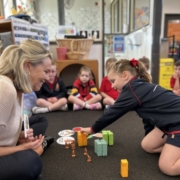
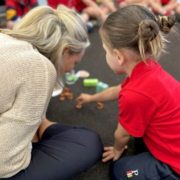
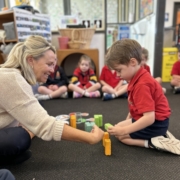
During her time with us, Julie introduced and strengthened social thinking skills alongside the Zones of Regulation, a framework that supports our youngest learners to understand and manage their emotions.
Together, these approaches support children to recognise and name their feelings, understand how their behaviour affects others, and develop practical strategies for managing emotions in real-life situations.
The Zones of Regulation is a curriculum designed to help children regulate their actions and emotions. Children learn to identify how they are feeling by recognising different ‘zones’, each represented by a colour. Using simple language, movement and games, they practise tools that help them return to a calm, ready to learn state. Over time, this builds problem-solving skills, self-control and resilience, which are central to learning and relationships in our Kindergarten program.
Social Thinking, is a teaching framework that complements this work by helping children understand the connection between thoughts, feelings and actions. Through stories, role play and carefully chosen characters, children learn to notice facial expressions and body language, understand that others have thoughts and feelings of their own, and follow a group plan, even when things change.
Importantly, Social Thinking is not about teaching children to simply ‘behave’. It helps them make sense of social situations and gives them a shared language for perspective-taking, group participation, emotional regulation and flexible problem-solving. These concepts are woven into daily Kindergarten life through consistent language and gentle guidance from educators.
The Kindergarten years are a remarkable period of growth. Alongside physical and social development, children are laying the foundations for emotional regulation and executive function. These skills include working memory, flexible thinking and self-control. In the classroom, this may look like remembering instructions, managing transitions, persisting with a task, or adapting when plans change.
At Peninsula Grammar, our Kindergarten environment is intentionally designed to support this development. Predictable routines, clear expectations and nurturing relationships help children feel secure as they explore growing independence. Educators support children through moments of frustration or dysregulation, helping them name feelings, practise calming strategies and reflect on their choices.
Julie also shared practical guidance with families, reinforcing the important role parents play alongside educators. Small, consistent strategies can make a meaningful difference, including:
- allowing children to experience losing in games and modelling how to manage disappointment
- reducing screen time and sensory overload, particularly before school
- using physical ‘heavy work’ after high stimulation to support regulation
- making end goals visible for children who find it hard to picture outcomes.
When families and educators work together, children benefit from consistent support that builds confidence, resilience and emotional wellbeing. These early foundations matter. By helping children understand themselves and others, we are supporting not only their Kindergarten experience, but their readiness for the many social and learning experiences still to come.
Lucinda Watson
Kindergarten Director


Related news
Building a Global Learning Community